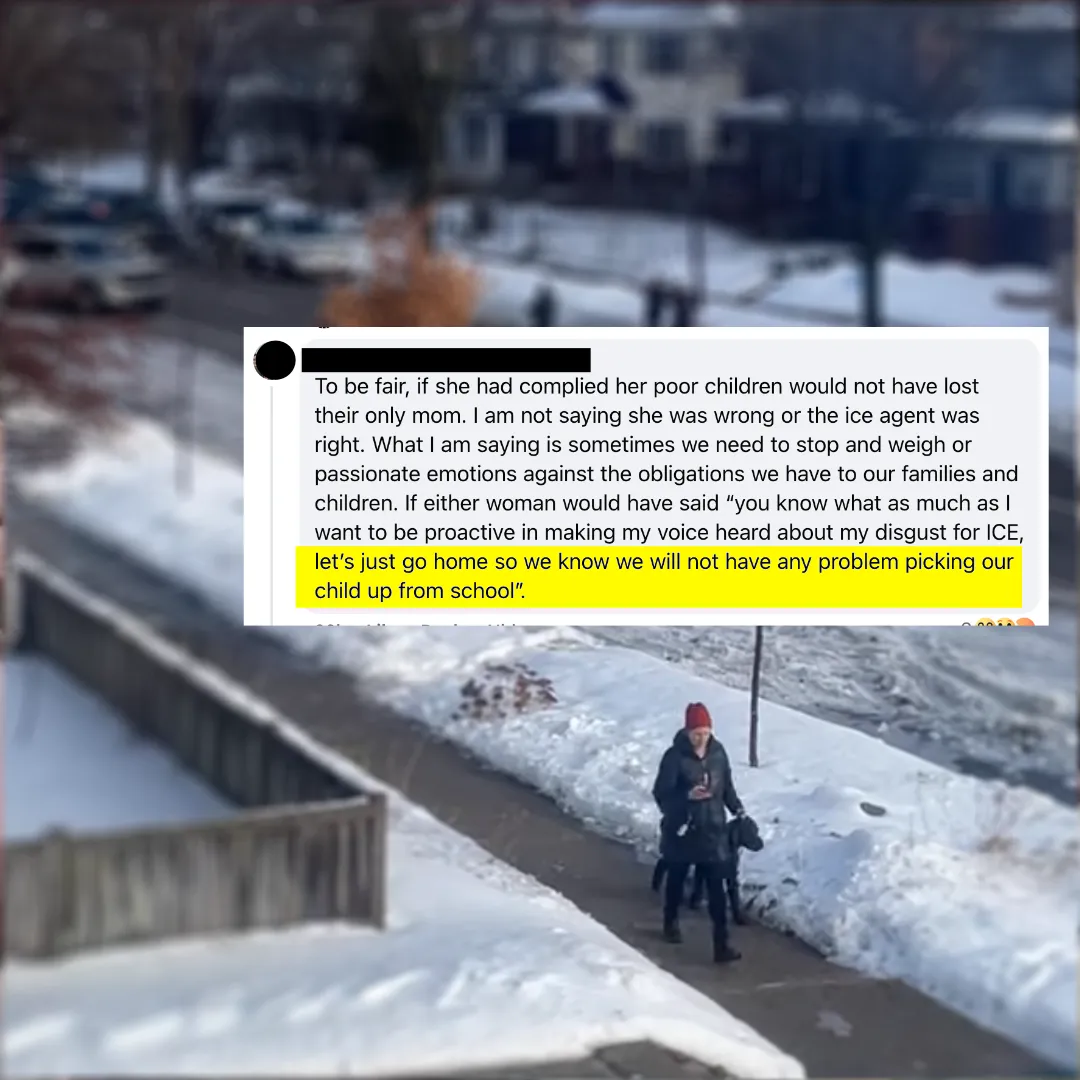

What do we owe each other as a society? That question has been running through everything about the Minneapolis shooting, especially the idea that Renee Good didn’t have to be there in the first place. That she should have stayed out of it. That she should have kept her head down.
But how remarkable and courageous is it that she didn’t?
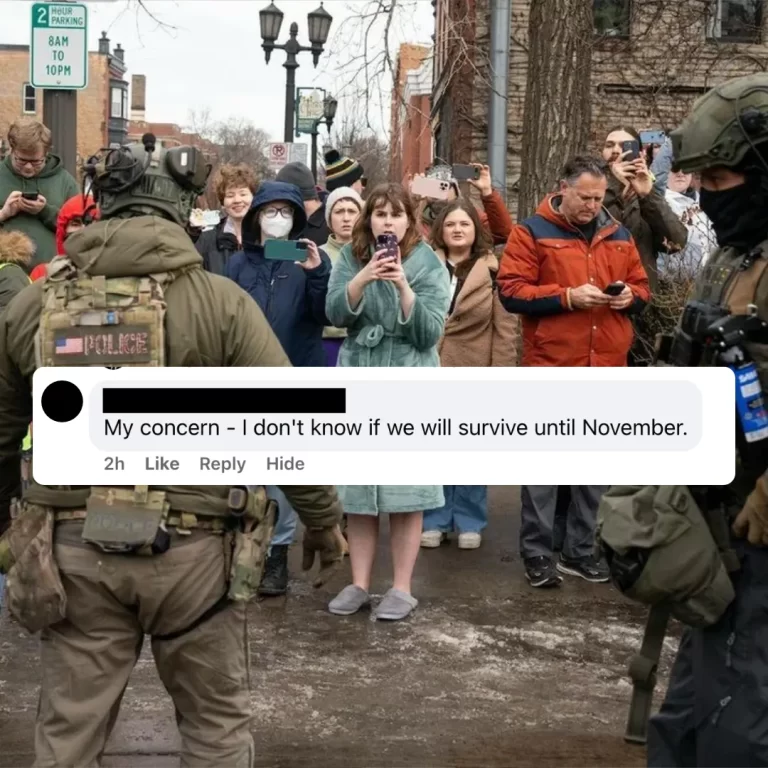
A lot of us are disheartened right now watching so many people defend the ICE thug who killed her. I call him a “thug” because that’s what he is. These are not community police doing careful law enforcement. These are paramilitary enforcers doing the bidding of a political machine. They are the Ku Klux Klan in Marine costumes, terrorizing people while pretending it’s about “law and order.”
They roll into cities under the pretense of removing “illegals,” and plenty of our fellow citizens cheer them on. That part is horrifying, but it’s also predictable.
What’s harder to deal with are the people who say things like this: To be fair, if she had complied her poor children would not have lost their only mom. I am not saying she was wrong or the ice agent was right. What I am saying is sometimes we need to stop and weigh [our] passionate emotions against the obligations we have to our families and children. If either woman would have said “you know what as much as I want to be proactive in making my voice heard about my disgust for ICE, let’s just go home so we know we will not have any problem picking our child up from school”.
And the reaction to this was brutal.
Many people started calling him a Nazi, to which he took great offense. Understandably. Who wants to be called a Nazi? They’ve been the bad guys of our entire lives.
They are the template authors and filmmakers use to create their own villains throughout literature and cinema. Anything even remotely resembling Nazi emblems, slogans, behavior, or beliefs is instantly recognizable in pop culture.
It’s easy to see the Empire as the bad guys in Star Wars because the movie immediately frames them that way. Nobody who went to see that movie was first subjected to decades of propaganda about how necessary the work of the Empire was to maintain “law and order” in the galaxy. No, we started watching and immediately saw stormtroopers attacking the good guys.
And we instantly knew who was who because of the music, and uniforms, and dialogue.
In real life, we don’t have a soundtrack to cue us in on who’s evil, and who’s not.
In real life, the good guys don’t wear white hats, and the bad guys don’t wear black hats. (Is anything from my childhood not racist?)
And in real life, the dialogue gets so heated, it becomes difficult to know what to believe sometimes.
But we do have a tool that movies and literature may have dulled by making the line between good and evil so obvious for our entire lives:
A bullshit detector.
We all feel it when something is off. When a story doesn’t sit right. When the moral math starts sounding like hostage logic.
“Just do what they say and you won’t get hurt” is what you tell someone with a gun to their head. It is not what you tell a free citizen living in a democracy.
That’s the shift people are missing.
The moment we start treating armed federal agents roaming our streets as something you must tiptoe around for your own safety, we’ve already accepted something has gone very wrong.
So I’ll ask again: what do we owe each other?
I would say a great deal.
We owe each other more than silence.
We owe each other more than “stay out of it.”
We owe each other more than shrugging until it’s our turn.
We owe it to each other to pay attention, to question the stories we’re being told, and to notice when fear is being used to train us to accept cruelty.
And we owe it to people like Renee Good not to rewrite their courage as recklessness just because it makes the rest of us uncomfortable.
Because fascism doesn’t just need monsters.
It needs people who look away.
And the most dangerous thing in moments like this isn’t hatred.
It’s the calm, reasonable voice telling you to mind your own business.